
Carrollton Directory Collection Paths
The exact publisher and year run for a Carrollton city directory was not confirmed in an authoritative online catalog. The honest starting point is therefore the access chain: ask the local repositories about physical or database volumes, then use verified companion collections for the years they document. Never assign an unverified date or publisher to a directory.
| Collection | Years | Where held | Access |
|---|---|---|---|
| City and reverse directories | Exact local run unverified | Ask Neva Lomason Library and UWG | Shelf or database inspection |
| Carroll County Genealogical Quarterly | Complete run, 1980 to present; 53 early issues digitized | UWG Special Collections | Appointment and digital holdings |
| Carrollton Sanborn map | March 1900, four sheets | Library of Congress | Free images online |
| Benjamin M. Long photographs | 1920s through 1960s | UWG Special Collections | Appointment and finding aid |
| Carroll deed book | 1827 to 1831 item | Georgia Archives Virtual Vault | Free digitized images |
| Federal census | Public schedules through 1950 | NARA and library databases | Database or archive access |
Call or email before visiting. A catalog gap does not prove that no volume exists. Staff may identify uncataloged books, licensed databases, vertical files, or microfilm. Record the full title, publisher, coverage statement, and year from the item itself.
Ask whether the repository holds a Carrollton alphabetical, telephone, or reverse directory for one year or decade. Include the street or surname, but do not assume the catalog uses “city directory.” A book may be filed as a telephone book, business directory, county directory, or local-history item. If it sits in a licensed database, confirm whether access needs a library card or onsite computer. For a physical volume, ask about copying, page retrieval, and appointments. These details belong in the citation because another researcher must be able to locate the same edition.
Begin at Carrollton's UWG Archive
UWG Ingram Library Special Collections is on the ground floor at 1601 Maple Street and asks researchers to request an appointment. Staff can be reached at 678-839-5455 or special@westga.edu. Its West Georgia collections include maps, books, oral histories, local photographs, political papers, and organizational records. Those sources can place a person between directory years or explain an address attached to a school, church, mill, or civic group.
The repository overview is captured here as a source for Carrollton city directory research.
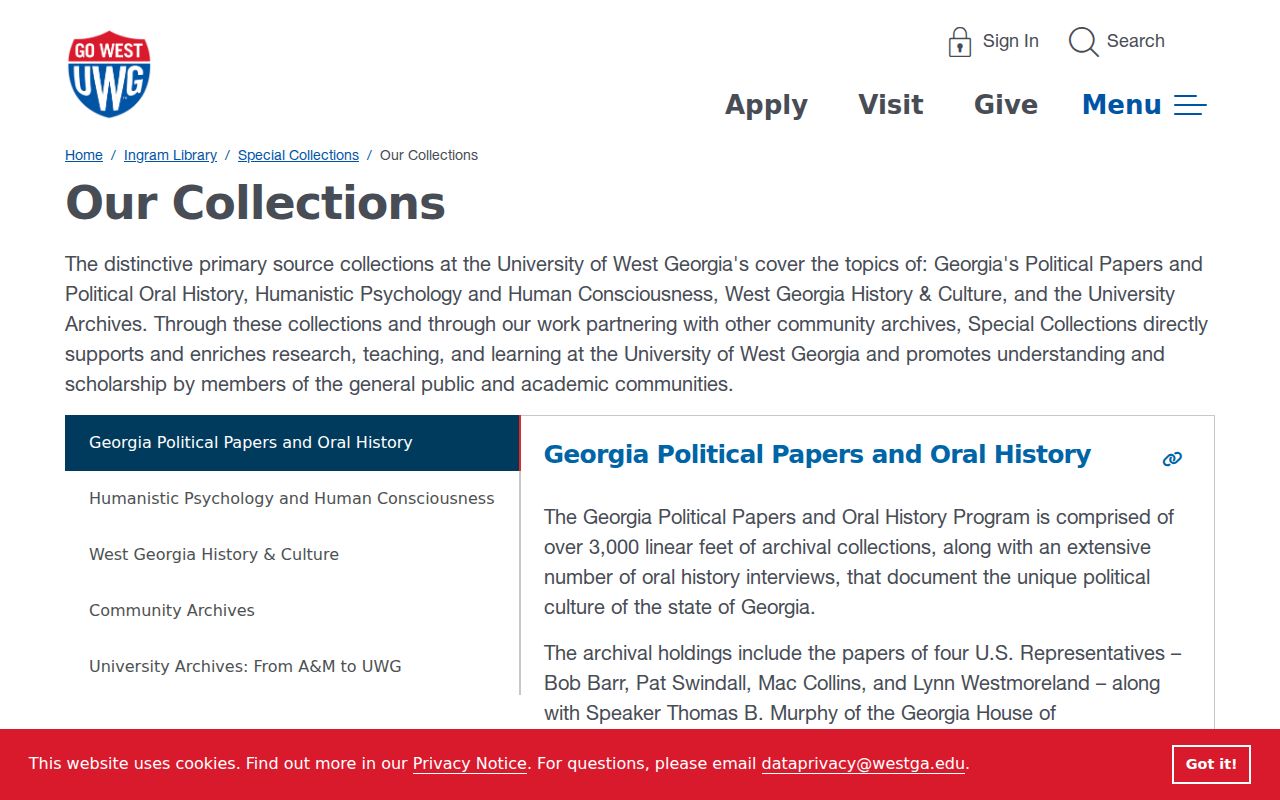
The collection descriptions help narrow an appointment request before staff pull material.
Use Carrollton Microfilm and Deeds
The Georgia Archives County Records Microfilm Index identifies more Carroll County holdings when modern catalogs fail. Search by county and record series. Access may be digitized, onsite, on microfilm, or routed through FamilySearch, where images can require login or an affiliate library.
The captured county-card interface shows this second access channel.
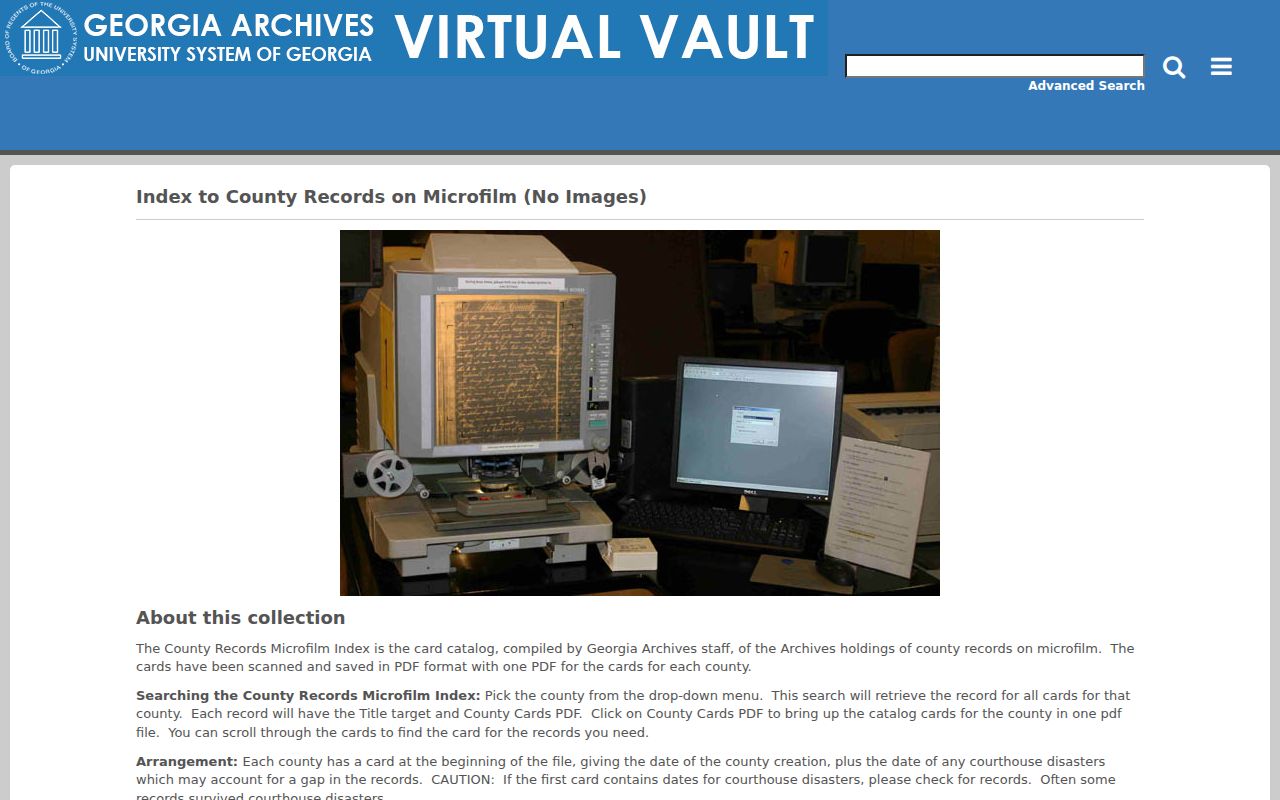
Use dates and record types from the catalog card when asking an archive or library for help.
A digitized Superior Court deed book covers 1827 to 1831 across 290 images. Its catalog notes irregular pagination, missing pages, and one anomalous later date. This surviving book matters because a reported 1828 record-loss event does not mean all early Carroll records vanished.
Read a Carrollton Directory Entry
No local entry was fabricated because no openly digitized authoritative Carrollton page was found. Inventory an actual entry exactly as printed. Start with the volume's abbreviation page, since symbols and short forms vary by publisher and year.
| Name | Surname and given name; spouse may appear in parentheses |
|---|---|
| Work line | Occupation, employer, or business address where printed |
| Home address | House number, street, and publisher-specific residence marks |
| Telephone | Number when the household was listed |
| Status marks | Tenure symbol, widow notation, and cross-references where used |
- Criss-cross directory
- The street-order section, arranged by address instead of surname.
- Householder index
- A listing centered on the named person responsible for a household entry.
- Abbreviation key
- The publisher's guide to symbols and short forms; save it before interpreting entries.
Directory tenure marks describe the publisher's coding, not a county title record. Verify ownership in the deed or tax roll. A spouse notation, occupation, or phone can help distinguish two same-name people, but each remains a dated clue.
Place Carrollton on Four Maps
The March 1900 Carrollton Sanborn map has four sheets. It shows building footprints, construction, uses, and historical street labels in the compact city. Pair an address or directory entry with the map, then compare that location with a census household and deed description. This can separate a changed street label from an actual move.
Carrollton's older core around Adamson Square and the traditional East and West Carrollton neighborhoods benefit most from this layer. The official comprehensive plan describes small regular lots, alleys, close-set buildings, and surviving older stock. Modern parcel and permit evidence is often stronger in expanding subdivisions, while the Sanborn sheets and tax digests supply context in the core.
Note: A historical map shows a structure and use at one date; it does not prove every occupant listed in a nearby directory.
Fill Carrollton Directory Year Gaps
UWG holds nearly all university yearbooks in digitized form and the West Georgian newspaper from 1933 to 2007. These are strong classmate, campus, club, and event sources in a university city. The complete Carroll County Genealogical Society newsletter run adds transcribed Bible, marriage, cemetery, postmaster, tax-digest, census, church, and family material.
The Georgia Archives birth-record guide identifies surviving Carroll material beginning in 1875, though that does not prove continuous civil registration from that year. The official guide appears here as another historical-name route.
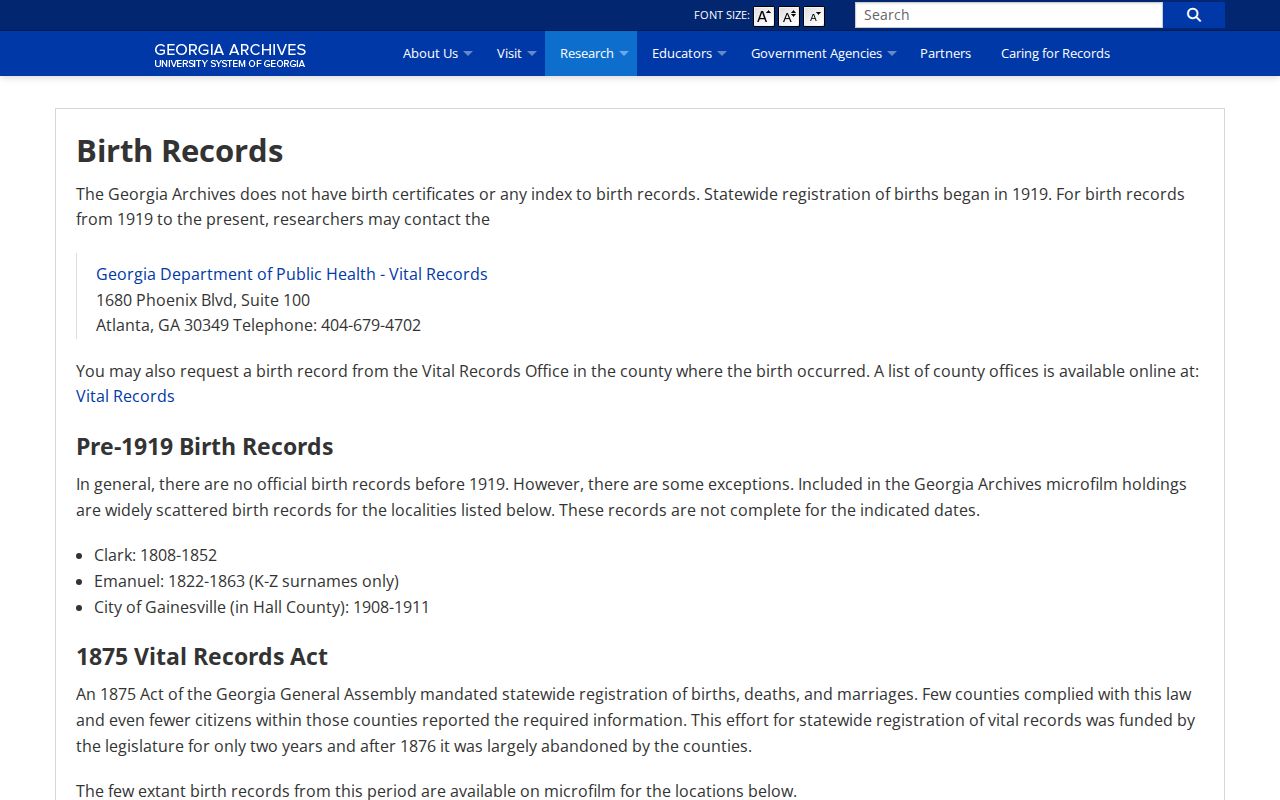
For early families, pair scattered civil records with church registers, cemeteries, newspapers, census, and probate.
UWG also holds a two-volume transcription covering 292 Carroll County cemeteries. Its political and oral-history collections, architecture survey, Mandeville Mills material, alumni records, and Booker T. Washington High School interviews can surface names missed by alphabetical directory searches.
Local industry and education shape the best companion source. Mandeville Mills operated from 1890 to 1954, and UWG holds textile and apparel material tied to that history. Chamber records can help with a civic or business name. Yearbooks and alumni files fit a classmate search, while church, cemetery, and Bible transcriptions fit an older family line. None is a full resident roll. Combine a name, date, group, and address, then verify the match in a record made for another purpose.
Track Carrollton Records Over Time
The local archive has distinct layers. This timeline keeps verified dates separate from the unverified run of printed city directories.
| Date | Carrollton record layer |
|---|---|
| 1826 | Carroll County was created. |
| 1827 to 1831 | The surviving deed-book item now appears in the Virtual Vault. |
| March 1900 | Four Sanborn sheets capture the compact city. |
| 1920s to 1960s | Benjamin M. Long photographed many Carrollton buildings. |
| 1933 to 2007 | The West Georgian newspaper supplies campus and community names. |
| Through 1950 | Federal population schedules are public under the 72-year rule. |
The courthouse story also needs care. A later courthouse burned in 1927, yet surviving early books and microfilm show that old evidence cannot be dismissed as lost. Cite the precise record found rather than making a broad claim about survival.
Carrollton's role as county seat is why court, deed, probate, and tax paths converge here even though their custodians remain separate. The land-lottery evidence, deed volume, Sanborn sheets, photographs, newspapers, and archives form a sequence, not one continuous directory. Keep gaps visible. A deed establishes a transfer, a census shows a household on one date, a yearbook shows school participation, and a photograph documents a building. Careful combination is stronger than forcing one source to answer every question.
Trace Family Through Carrollton Directories
A Carrollton city directory is strongest as one dated point in a longer chain. Move one edition at a time and preserve spelling, spouse, occupation, and address details. Then place the entry beside the census, deeds, tax digests, and probate evidence.
- Find the person in an alphabetical section and save the title page and abbreviation key.
- Move to the next available edition, recording spelling, spouse, occupation, phone, and address changes.
- Use a criss-cross section, when present, to test the same house number and nearby entries.
- Pair the relevant years with public census schedules, tax digests, deeds, maps, and photographs.
- Use probate, obituaries, and cemetery transcriptions to explain a disappearance or connect heirs.
Disappearance can mean a move, death, omission, changed name, or an unlisted phone. It is not a conclusion by itself. If a modern find needs confirmation through current public sources, shift to the resident lookup process rather than treating an old directory as present evidence.
The Georgia county registrar locator is a modern public-record access source assigned to this collection page.
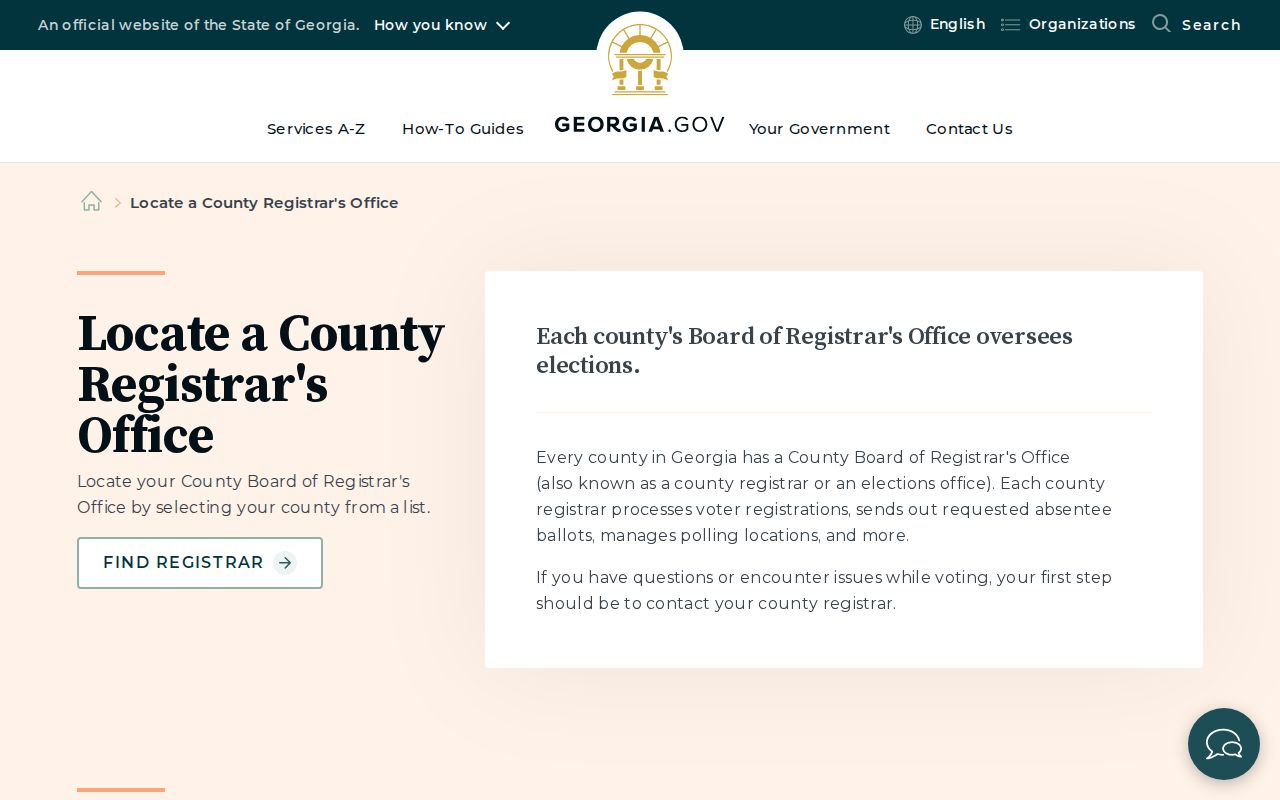
It demonstrates why a current registration question belongs with the county registrar, not an archive.
The Georgia Attorney General open-government resource explains the records-law framework for requests.
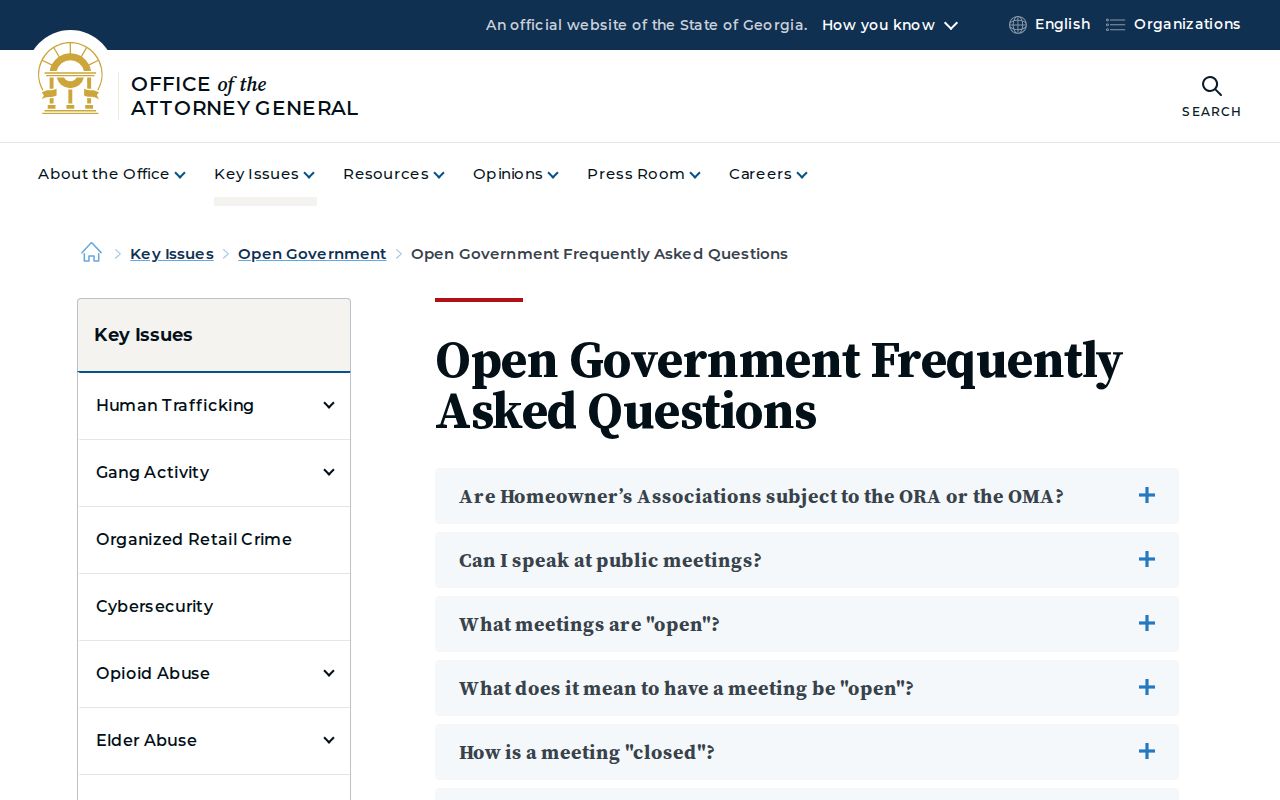
Use that route when a public custodian has a responsive historical record but no online index.