
Carrollton Previous-Resident Sources
A sound Carrollton address history uses each source for the years and facts it can truly support. The current assessment card supplies a parcel key. Recorded deeds track transfers. The March 1900 Sanborn sheets show buildings and old street labels, while public federal census schedules name households at ten-year intervals through 1950. UWG photographs and city permit material help explain changes to the structure. Exact local city and reverse-directory year runs were not verified in an authoritative online catalog, so those volumes must be checked with UWG Special Collections or Neva Lomason Memorial Library before they are cited.
| Record source | Documented span | Custodian | Evidence supplied |
|---|---|---|---|
| Assessment and GIS | Current roll; sales history varies | Carroll qPublic | Owner, situs, mailing address and parcel |
| Recorded deeds | County formed 1826; live cutoff unstated | Superior Court Clerk and Archives | Transfers, parties and legal descriptions |
| Sanborn map | March 1900 | Library of Congress | Footprint, use and historic street labels |
| Federal census | County context from 1830; public through 1950 | NARA and library databases | Named occupants and relationships |
| Long photographs | 1920s through 1960s | UWG Special Collections | Visual building evidence |
| City permits | Current and prior-year lists; start year unstated | Carrollton Community Development | Work, applicant and dates where present |
No row alone identifies all previous residents. A deed names owners, not every occupant. A census is a dated household snapshot. A permit applicant may be a contractor. Treat each as one part of a tested timeline.
Start Carrollton Address History
Enter the modern street address in Carroll qPublic. Save the situs address, parcel number, current assessed owner, separate owner mailing address, legal description, subdivision references, and any loaded sales history. The situs is the land location. The mailing address is where the tax notice goes, and it may be somewhere else. That distinction prevents a false claim that the assessed owner lives at the Carrollton property.
If an exact address misses, remove the direction, street suffix, or unit. A street fragment or map click may find the parcel. Keep the parcel number and legal description because both survive many changes in postal wording.
Trace Carrollton Owners Backward
The Carroll County Clerk of Superior and State Courts records deeds at 311 Newnan Street. Start with the present owner's acquisition deed. The county and clerk sites link to deed search, but official public information does not state a firm online cutoff or image price. Call 770-830-5830 or use the weekday counter for a book, image, or certified-copy quote when the web trail ends.
- Use the parcel card and sales reference to locate the newest acquisition deed.
- Copy the grantor, grantee, date, recording reference, and full legal description.
- Search that grantor as an earlier grantee. Limit by date and match the land.
- Repeat one transfer at a time, then move to courthouse books or archive microfilm.
- Grantor / grantee
- The grantor gives an interest; the grantee receives it.
- Chain of title
- The linked sequence of transfers for the same land.
- Legal description
- The lot, block, district, land lot, or boundary wording that identifies land despite an address change.
Early Carrollton Deeds Survive
Carroll County was created in 1826. The Georgia Archives Virtual Vault deed book covers 1827 through 1831 across 290 digitized images. Its catalog notes irregular pagination, missing pages, and an anomalous 1864 date. Those limits should travel with any citation. This survival is important because the Archives reports an 1828 record-loss event and a later courthouse burned in 1927. Neither fact proves that every early deed vanished.
An online miss should lead to the county microfilm card index, the clerk's books, or FamilySearch place catalog. Save the image number, page markings, parties, land description, and access date.
Map Past Carrollton Residents
The four-sheet March 1900 Carrollton Sanborn map bridges a legal parcel and an old street label. It records footprints, construction materials, uses, and the compact layout before later growth. Compare block shape, nearby landmarks, and lot position rather than trusting a modern house number to remain unchanged.
The map does not name a household. It tests whether the structure existed and whether an old census or directory address fits the site. East and West Carrollton contain older small lots, alleys, and buildings close to the street, so block form may be as useful as the printed label.
Build Carrollton Household Timelines
Ownership and occupancy often split. Federal census schedules offer snapshots through 1950 under the 72-year rule. A verified criss-cross directory lists a street and number first, then an occupant or telephone. An alphabetical directory may add a spouse, occupation, employer, and home address. Carrollton's exact publisher and year run remain unverified, so inspect the title page, coverage note, and abbreviation key before using an entry.
- Choose a dated address or deed transfer, then search the closest census year.
- Check alphabetical and reverse directory sections between census snapshots.
- Copy spelling, spouse, occupation, address, and any tenure marks exactly.
- Use deeds and tax digests through gaps, then probate or an obituary when a name disappears.
The collections are treated in depth on the Carrollton city directory page. Here they test the past residents attached to one address.
See Carrollton Buildings Change
UWG Special Collections holds Benjamin M. Long photographs of Carrollton buildings from the 1920s through the 1960s, plus maps, oral histories, and local records. A research appointment is requested at 1601 Maple Street. The photographs can test whether a building or streetscape matches the address trail, though a pictured structure does not prove who occupied it.
UWG also holds a complete Carroll County Genealogical Society newsletter set. Its work on settlers, marriages, cemeteries, Bible records, censuses, tax digests, and families can add names that broad indexes omit. Contact staff with the address, date span, names, and deed reference already known.
The strongest Carrollton house-history file places these visual items beside dated land records. Write down which side of the street the camera faced, the nearest cross street, the building material, and any business sign. Then compare that detail with the Sanborn footprint and the deed's land description. A photograph catalog title may use a business name or a former owner instead of the modern address. Search all three. Oral histories and Chamber records can explain a commercial use, while the 1977 Carroll County architecture survey may supply an architectural label or survey note. None of those sources replaces a deed. Together, they can show why a parcel changed shape, why a building name persists, or why a past resident appears under a nearby number.
Close Carrollton Resident Trails
A death, marriage, estate, or obituary may explain why a past resident leaves the address record. Carroll Probate Court keeps estates and marriage licensing, while the Superior Court clerk keeps divorce decrees. Georgia DPH supplies certified vital records and verifications under eligibility rules. Vital files are not a general address index.
The Georgia birth-record request page shows the official path for eligible requesters.
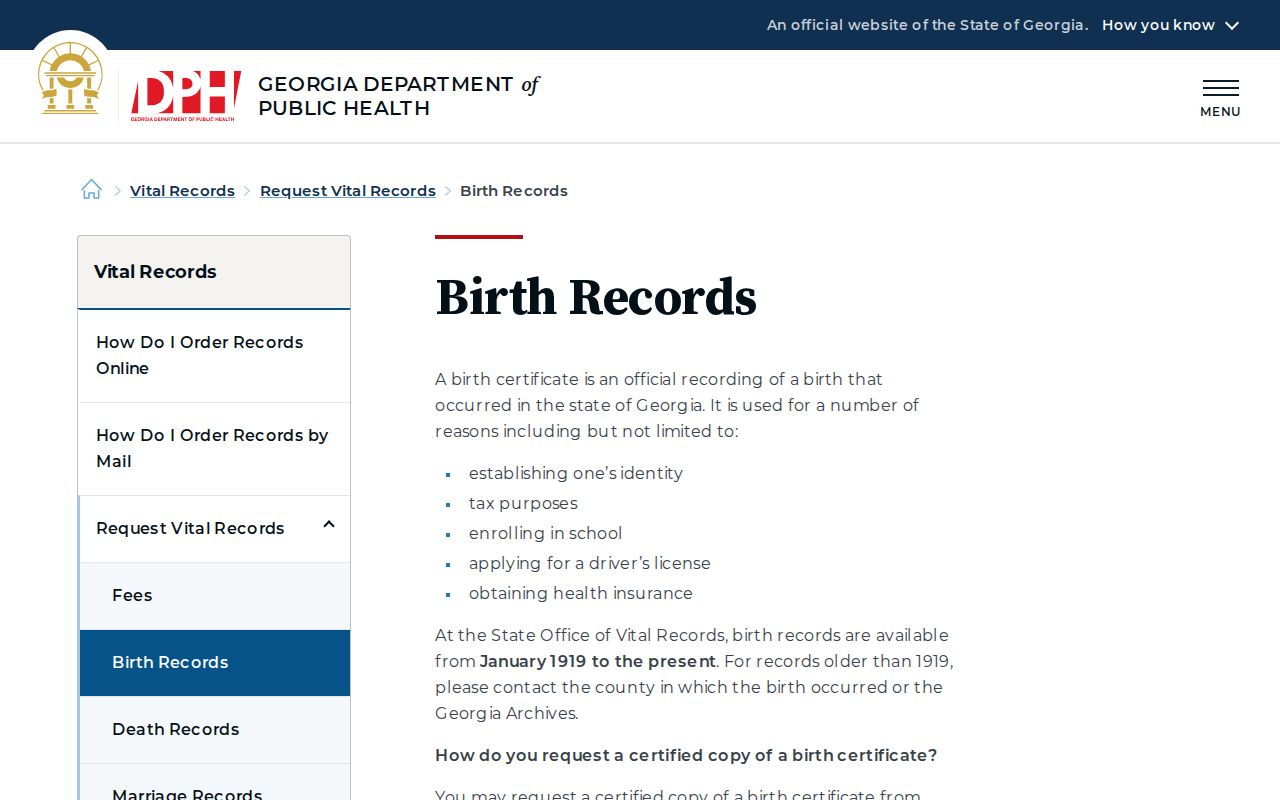
The screen distinguishes a restricted certificate request from open address research. Use it only when the requester qualifies.
The Georgia vital-record fee page is the place to recheck charges before ordering.
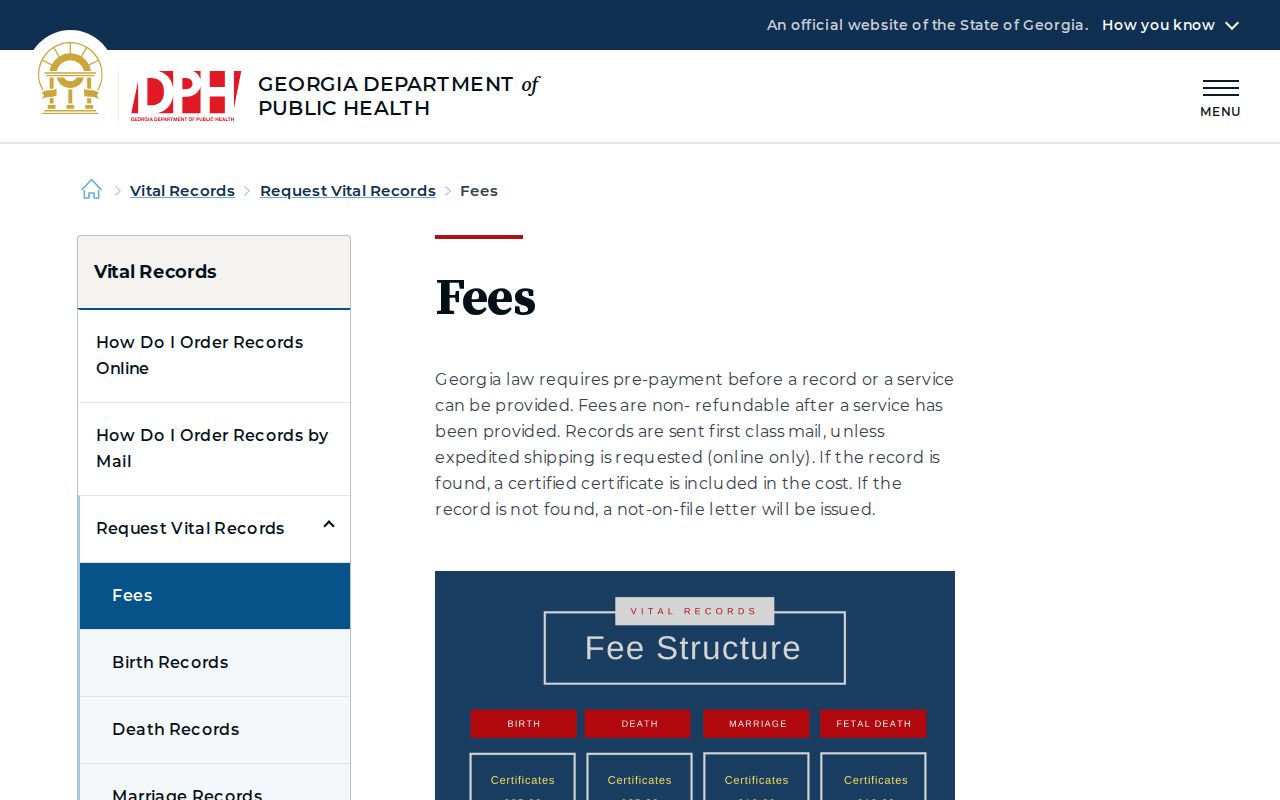
Fees may change. Preserve the date checked, and obtain the actual decree or estate file from the Carroll County custodian when verification is not enough.
Test Carrollton Address Gaps
Carrollton publishes a route to permits issued in the current and prior years. Ask for the issued list first, then request an underlying file only for the address and date that matter. Building, electrical, HVAC, plumbing, gas, and pool records may show work, an applicant, and dates. The applicant may be a contractor, not a previous resident.
For city records not posted, send the city's form with the department, address, record type, and date span. If records cannot be produced in three business days, the Georgia Open Records Act ordinarily calls for a written timetable and cost estimate. Deeds and probate stay with the elected county clerks.
When a prior owner's trail ends with a death, ask Carroll Probate Court for the estate name rather than a broad family search. Public estate papers may identify a decedent, petitioner, executor, and heirs, subject to protected material. The court publishes a staff examination and abstract charge of $10 per estate or name, plus separate copy and certification charges. Record the estate number and filing date, then compare the representative named there with the next deed. An obituary or cemetery transcription can support family context, but spelling and kinship should be checked against the probate file. This method keeps the conclusion tied to a legal transfer instead of assuming that every person with the same surname shared the Carrollton address.
Lawful use. Research Carrollton previous residents for house history, genealogy, heirs, or personal curiosity. Never use an address trail to stalk, threaten, or harass a living person.